MRAC: Multimodal, Generative and Responsible Affective Computing (4th International Workshop at ACM-Multimedia 2026)
5 minutes
Introduction #
Affective Computing involves the creation, evaluation and deployment of Emotion AI and Affective technologies to make people’s lives better. The creation, evaluation and deployment stages of the emotion-ai model require large amounts of multimodal data from RGB images to video, audio, text, and physiological signals. In principle, the development of any AI system must be guided by a concern for its human impact. The aim should be striving to augment and enhance humans, not replace humans; while taking inspiration from human intelligence, safely. To this end, the MRAC 2026 workshop aims to transfer the same concepts from a small-scale, lab-based environment to a real-world, large-scale corpus enhanced with responsibility. The workshop also aims to bring to the attention of researchers and industry professionals of the potential implications of generative technology along with its ethical consequences.
Call for Contributions #
Full Workshop Papers #
The 4th International Workshop on Multimodal, Generative and Responsible Affective Computing (MRAC 2026) at ACM-MM 2026 (track for Multimodal and Responsible Affective Computing) aims to encourage and highlight novel strategies for affective phenomena estimation and prediction with a focus on robustness and accuracy in extended parameter spaces, spatially, temporally, spatio-temporally and most importantly Responsibly. This is expected to be achieved by applying novel neural network architectures, generative ai, incorporating anatomical insights and constraints, introducing new and challenging datasets, and exploiting multi-modal training. Specifically, the workshop topics include (but are not limited to):
- Large scale data generation or Inexpensive annotation for Affective Computing
- Generative AI for Affective Computing using multimodal signals
- Multi-modal method for emotion recognition
- Privacy preserving large scale emotion recognition in the wild
- Generative aspects of affect analysis
- Deepfake generation, detection and temporal deepfake localization
- Multimodal data analysis
- Affective Computing Applications in education, entertainment & healthcare
- Explainable or Privacy Preserving AI in affective computing
- Generative and responsible personalization of affective phenomena estimators with few-shot learning
- Bias in affective computing data (e.g. lack of multi-cultural datasets)
- Semi-/weak-/un-/self- supervised learning methods, domain adaptation methods, and other novel methods for Affective Computing
We will be accepting the submission of full unpublished and original papers. These papers will be peer-reviewed via a double-blind process, and will be published in the official workshop proceedings and be presented at the workshop itself.
Submission #
We invite authors to submit unpublished papers (ACM-MM format) to our workshop, to be presented at an oral/poster session upon acceptance. All submissions will go through a double-blind review process. All contributions must be submitted (along with supplementary materials, if any) at the Openreview with a note Track 2. Accepted papers will be published in the official ACM-MM Workshops proceedings.
Note #
Authors of previously rejected main conference submissions are also welcome to submit their work to our workshop. When doing so, you must submit the previous reviewers’ comments (named as previous_reviews.pdf) and a letter of changes (named as letter_of_changes.pdf) as part of your supplementary materials to clearly demonstrate the changes made to address the comments made by previous reviewers.
Important Dates #
| Paper Submission Deadline | |
| Notification to Authors | |
| Camera-Ready Deadline | TBD (12:00 Pacific time) |
Registration #
Workshop registration will be handled by the ACM-MM-2026 main conference committee. Please follow the ACM-MM-2026 website for related information.
In addition, ACM has started the Open Access publishing model. Please see the details here: Website
Presentation Policy #
ACM Multimedia 2026 is an on-site event only. This means that all papers and contributions must be presented by a physical person on-site; remote presentations will not be hosted or allowed. Papers and contributions not presented on-site will be considered a no-show and removed from the proceedings of the conference. More details will be provided to handle unfortunate situations in which none of the authors would be able to attend the conference physically.
Presentation Instructions #
Coming soon!
Workshop Schedule #
TBD #
Time zone: Rio De Janeiro time GMT -3 hour
Location: Coming soon
Invited Keynote Speaker #
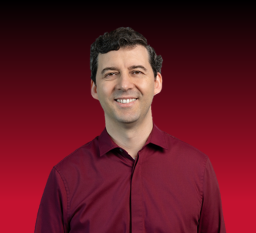
Carnegie Mellon University
Biography: Prof. Carlos Busso is an IEEE Fellow and ISCA Fellow. He is a Professor at Language Technologies Institute, Carnegie Mellon University, where he is also the director of the Multimodal Speech Processing (MSP) Laboratory. Before joining CMU, he was a faculty member at The University of Texas at Dallas (UTD), where he served as an Assistant Professor (2009-2015), Associate Professor (2015-2020), and Full Professor (2020-2024) in the Department of Electrical and Computer Engineering. Prof. Carlos Busso’s research focuses on human-centered multimodal machine intelligence and its applications in speech-based interfaces. His work explores cutting-edge topics, including: Speech and multimodal processing, Affective computing, Social signal processing, Multimodal machine learning, Multimodal foundational models, Language technology for healthcare and mental health, Multimodal behavior generative models, The outcomes of his research have direct implications in many practical domains, including national security, health care, entertainment, transportation systems, and education.
Organizers #
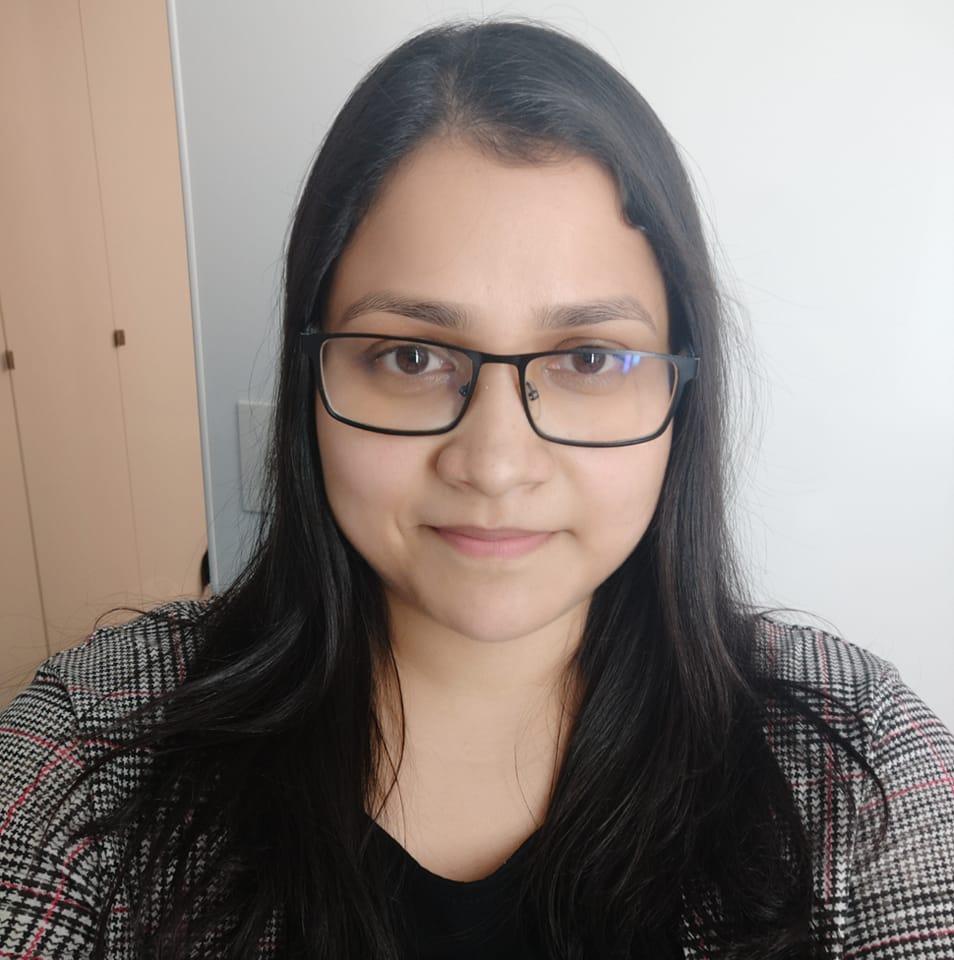
The University of Queensland

Monash University
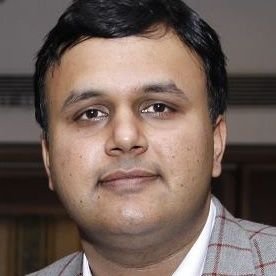
Monash University

UNSW Canberra
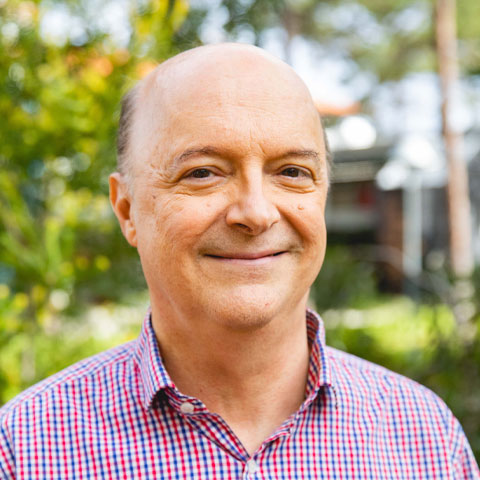
Curtin University
Program Committee #
TBD
Contact #
Please contact us if you have any questions.
Email: shreya.ghosh@ai.iitkgp.ac.in, Zhixi.Cai@monash.edu, abhinav.dhall@monash.edu
Image Source: Wall-E
CMT ACKNOWLEDGMENT: The Microsoft CMT service was used for managing the peer-reviewing process for this conference. This service was provided for free by Microsoft and they bore all expenses, including costs for Azure cloud services as well as for software development and support.